
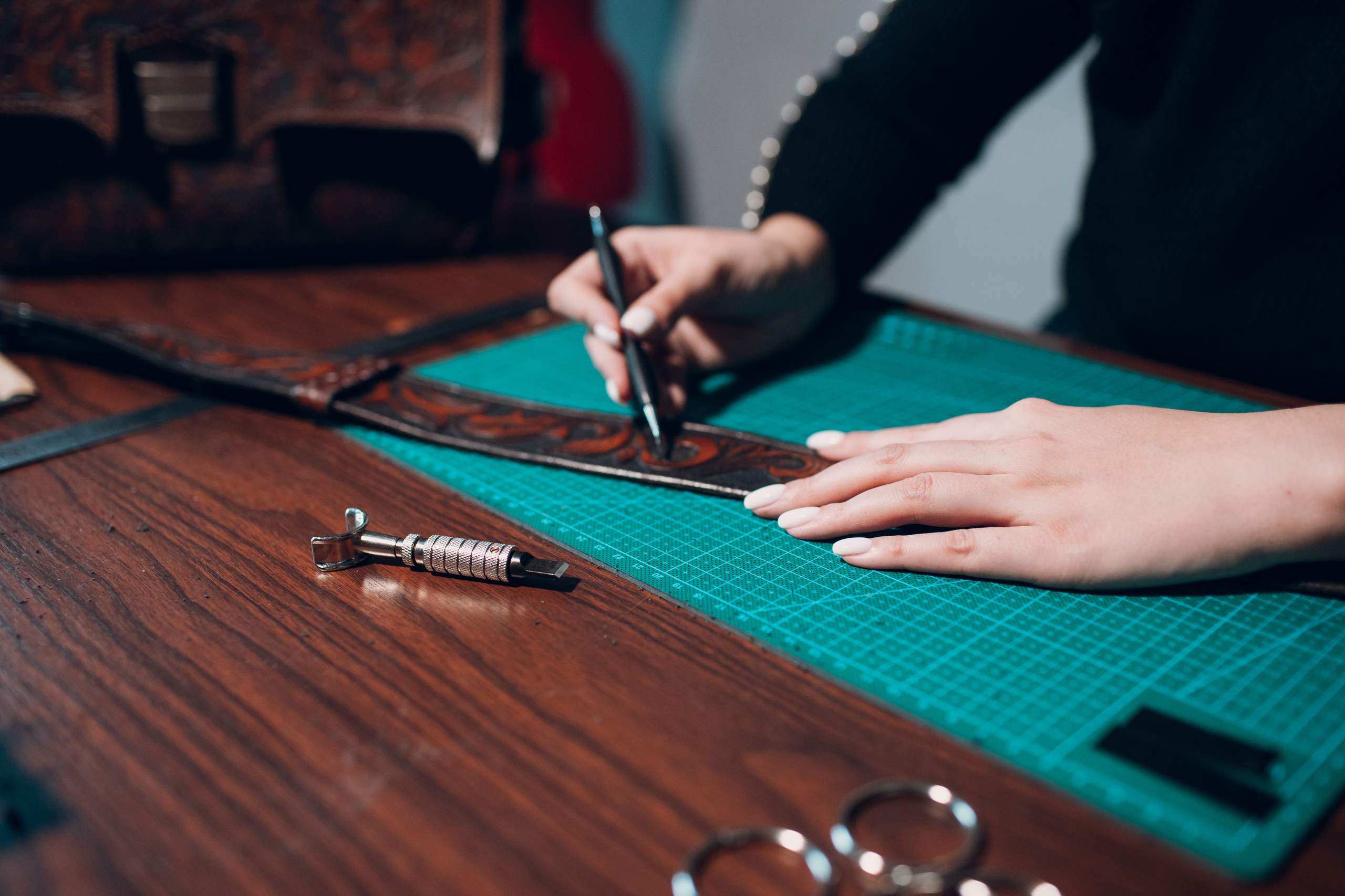
0 → 1st Handmade Leather Item: How Beginners Start
At first, leathercraft may seem difficult, as it involves tools, templates, stitching, and finishing. Most beginners think you’ll need at least a few years to reach a high level. But in fact, the first substantial advances come earlier by structuring learning and prioritizing doing over theory.
The first thing to do is mindset. Beginners expect perfection from the very first try, but that is not how leathercraft works. Early projects should be rough. The important thing is to learn how the material behaves, what the tools feel like in hand, and how the most basic construction works. Once you recognize that advancement occurs incrementally, your learning process will feel lighter.
You only need a minimal set of basic tools to get going. You don’t need a full workshop yet. With basic cutting tools, needles, thread, and simple edge-finishing tools, you’ll be able to make your first genuine project.
The first project is typically a small item, like a cardcase or a simple wallet. It may be simple, but it lets you learn how the whole process works: measuring, cutting, sewing, assembly, finishing. This is where you really learn: each step forces you to learn how leather reacts and how accuracy translates into the finished product.
Then, with a few more projects, your practice starts to work. The movements come more naturally, the stitches begin to get better, the handling of the material becomes more precise. Leathercraft is a discipline based on doing again and again, and improvement can start to happen even more quickly when you’re creating something consistently.
By the time you finish a few of the most basic items, you naturally advance toward more complicated projects: structured wallets, belts, and small bags. Now you’re not just copying something from someone else’s work, but you’re already beginning to learn construction principles and are getting better at developing your own methods and finishings.
Leatherworking is not talent or aptitude. It’s consistency and doing. By focusing on creating rather than overthinking, each project is a step forward, and with time, craftsmanship will come more and more naturally to you.