
Why Leather Fails (And How To Ensure It Holds On For Years)
When you first get into leathercraft, you quickly realize that a big part of working with leather is dealing with failed leather objects. Whether the edges have come apart, the stitching has unraveled, the piece lost it’s shape, or the leather cracked, it can feel quite disappointing when you’ve spent your precious time and resources making something that doesn’t stand the test of time.
The truth is, most leather failures happen before the piece actually sees any use at all, even if you have the finest materials. A big contributing factor could be that you just bought the wrong leather. Leather is leather, but not all leathers are equal. It’s crucial to understand which leather is right for the project before you start. For example, the leather chosen for a belt will obviously need to be a certain thickness and have the tensile strength to stand up to whatever stresses will be placed on it. A great piece begins with the proper leather choice.
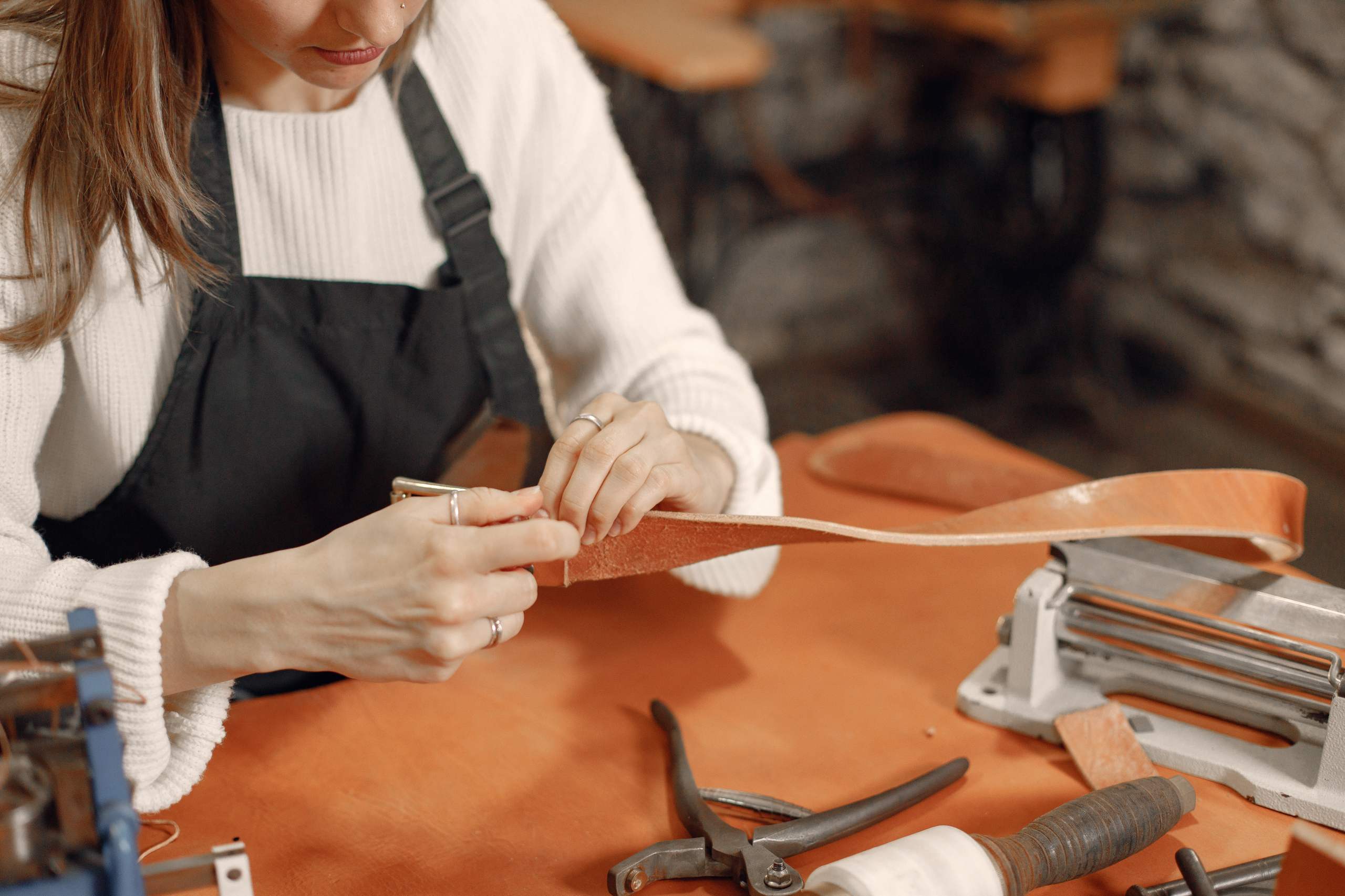
Stitching is a major factor as well. There are a ton of different techniques and types of thread you can use to sew leather, but the most common problem for leather failures is simply bad or sloppy stitching. You can have the sturdiest leather in the world, but if the stitching is uneven or too loose, chances are that piece will come apart before it reaches the end of it’s lifespan. When stitched correctly, a handmade leather piece can hold up for ages. A stitch that isn’t tight, or is simply placed with a lack of focus can result in a piece not being able to make it past it’s first use.
Edge finishing is an often overlooked part of construction that can be a big problem down the line. Whether you chose to paint your edge or burnish it, you want to make sure it is finished with some kind of edge dressing. If your edge is left raw and unprotected, moisture and the elements will eat away at it, which will ultimately lead to your leather object coming apart.
Design choices play a role as well. If the shape of the piece is overly complex or it has structural weak points that aren’t properly supported, the object will most likely fail once you start using it. A piece that requires a little bit more attention to it’s construction will stand the test of time. The piece won’t be perfect immediately, but with careful consideration to it’s structural integrity, the chances of this happening are slim.
Luckily all these problems can be fixed! Once you know how the materials, stitching, finishing, and design will affect the object as a whole, you’re well on your way to creating a piece that will last for ages. Leather crafting isn’t just about making something look pretty. It’s about making something that can withstand real world wear and tear.
All it comes down to is being aware of what’s going on when you’re making leathercraft projects. If you think about every choice as you cut and stitch, your end result will reflect that and can easily last you for years, instead of falling apart after one use.