Beginner Guide: Leatherworking Tools You Need (And Don’t)
Tools. For many new leatherworkers, they’re the first thing you worry about: what tools do I buy? How many should I buy? Why do some guys have 20 of them, but others seem to be able to get by with fewer than five?
And, honestly, I can see why beginners have questions like that. When you first start, the temptation to buy more tools and more tools and more tools can be really tempting. It can feel like you need a complete leatherworking workshop at your disposal. You need all sorts of knives. You need all these special punches and jigs and presses and machines. You’ll need everything, and everything can be expensive too. But, truthfully, all those tools are completely unnecessary.
The truth is, you can make incredibly high-quality leather goods with just a small handful of basic tools.
The key thing to remember is that most of the work you do with leather is really simple: cutting, stitching, and finishing. And so, you only need a couple of basic tools for each of those activities.
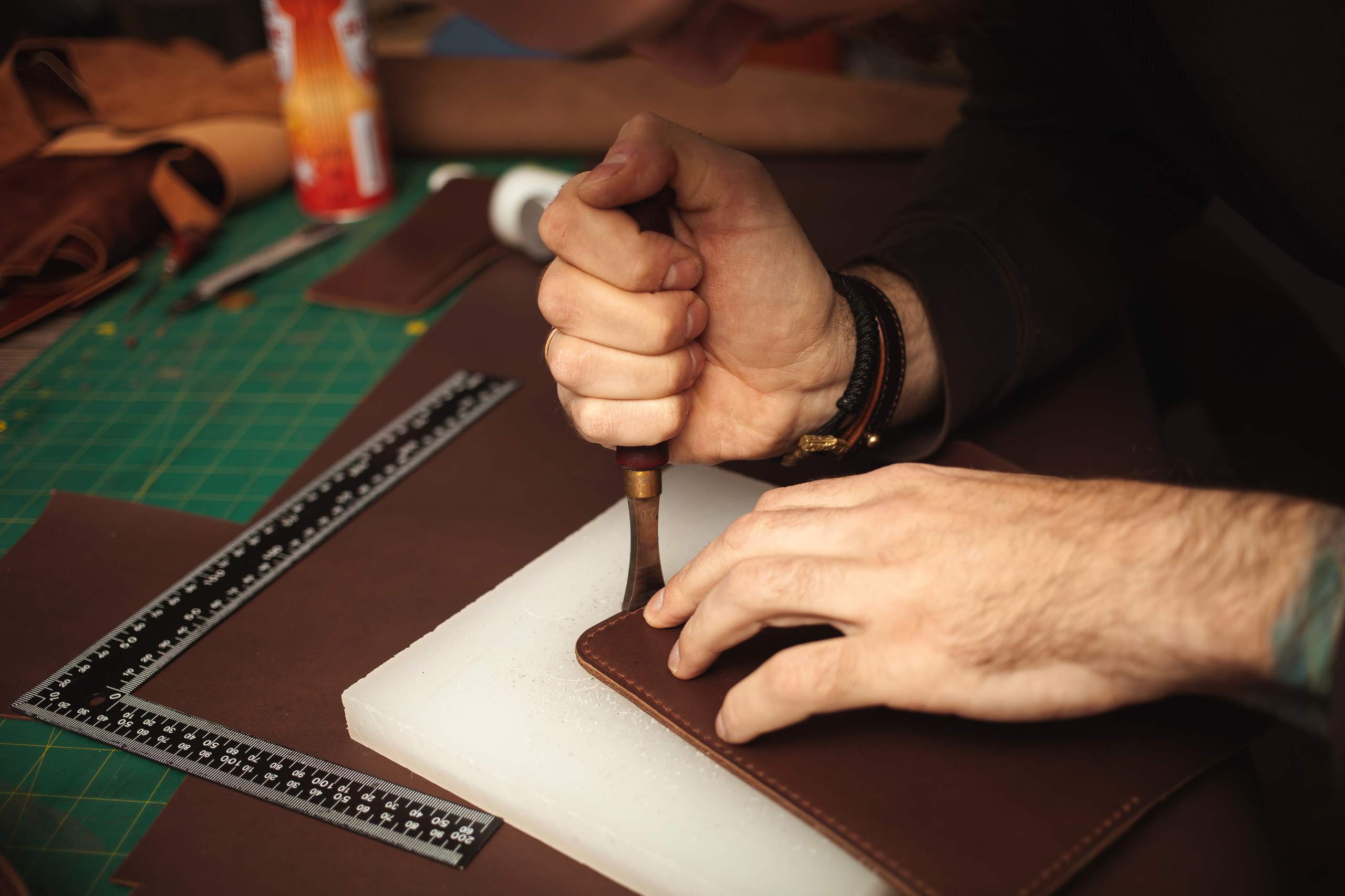
A single, sharp knife will get you accurate, straight cuts and clean lines. All you need to stitch leather are a few leatherworking needles, some good thread, and a way to mark where your stitch holes will go. You also don’t need any fancy finishing tools, as the correct use of an edge tool and a basic finisher can give you incredible, professional results on any leather project you work on. You don’t need a bunch of expensive machines and complicated jigs and presses and specialty leather tools to get started.
That said, it is understandable why beginners might be concerned that they need more tools. If you’re going to be mass-producing leather goods, you’ll need those tools. However, when you’re learning, they won’t help you. In fact, they can work against you. The best way to learn how to handle a tool in leathercraft is with your own hands, and you get much better control on a single, simple knife than a machine, and much better feel and precision with a single edge tool than a set of 12 expensive ones.
When you start, it might be hard to control all the tools in the world at the same time. So start off with just one or two or three. Then, as you get the knack of how to hold the tool and how to manipulate the tool against the leather, and the correct way in which to use it for the job you’re working on, you can start to add on. It’ll make much more sense to you if you need them, because you’ll know what you’ll be using them for.
The most important thing with leatherworking tools is learning how to work with them. You may need a simple tool to do a job properly. It may only take a minute or two, but that’s all it’ll take to get the result you want. Once you’ve done it a few times, you’ll have the hang of it. Then you can try it with a different tool.
Don’t worry about tools until you learn how to work with them first, and don’t buy more tools than you need. It won’t make you a better leatherworker. Your skill as a leatherworker will come from your ability to control the material you’re using and how you use the tools. And that, ultimately, is the key to being a better leatherworker than any tool can teach you.